
Bayonne Superior Roofing handles storm damage roof repair in Bayonne, NJ, serving surrounding cities including Roselle Park, North Arlington, Guttenberg, East Rutherford and Rutherford. A city with water on three sides takes storms head on, and in 20+ years we have repaired roofs after nor’easters, summer thunderstorms and the coastal storms that push wind and water across the peninsula.
Storm work has three parts: securing the roof so no more water gets in, documenting the damage so you have your own record for a claim and making the permanent repair once the weather allows. We photograph and write up every storm-damaged roof, and when you ask, our crew will meet your insurance adjuster on site to walk through what we found.
We also tell you honestly what is and is not storm damage. A roof that was worn out before the storm will not become a covered loss because the wind blew, and a claim built on wear is likely to be denied. Knowing the difference before you file saves time and frustration.
Types of Storm Damage to Roofs
Wind Damage to Shingles
Wind damage begins at the edges of the roof, the eaves, rakes and ridge, where gusts can get under the shingles. It shows up as missing shingles, tabs creased back along a line where they bent in the wind, broken sealant strips and lifted ridge caps.
Creased shingles are easy to miss from the ground but matter, because a shingle that has been folded back has lost its seal and will keep lifting. We note each one in the report, and replacements use shingles rated for wind resistance under ASTM D3161 Class F or ASTM D7158 Class H.
Hail and Impact Damage
Hail bruises shingles by knocking granules loose and cracking the mat underneath, leaving soft spots that age faster than the rest of the roof. It also dents gutters, vents, flashing and metal roofing, which helps confirm that a storm was responsible.
We check soft metals and the shingles on every slope, since hail damage is usually spread across the roof rather than concentrated in one area. Where you want more protection next time, shingles rated UL 2218 Class 4 for impact resistance are an option.
Fallen Trees and Limbs
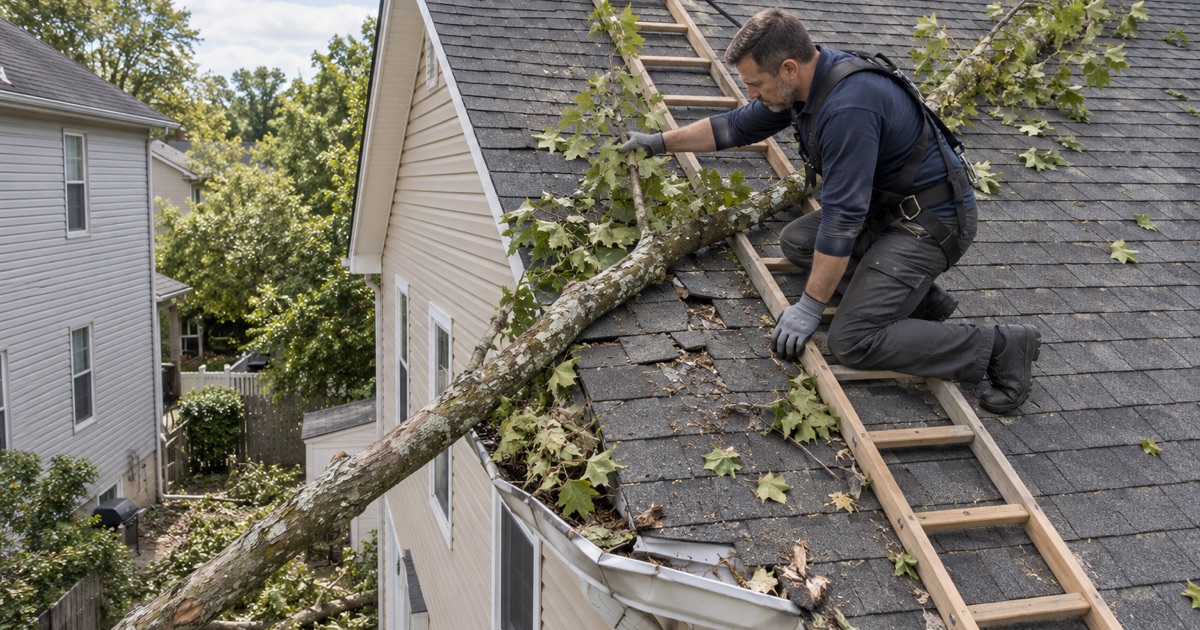
A limb that hits the roof can puncture the decking, crack rafters and tear away flashing and gutters. Even a branch that only scrapes across the surface can strip granules and break shingles.
We secure the opening, check the framing from the attic and document the damage before debris is cleared. Structural damage is repaired properly, with new framing and decking, before the roof covering goes back on.
Flat Roof and Edge Damage
On low-slope rear roofs and commercial roofs, wind lifts membrane at the edges and corners, peels back loose edge metal and coping and can tear seams. Storm debris also clogs drains and scuppers, so water ponds and finds every weak spot.
We reattach or replace edge metal and coping, repair torn membrane and clear and test every outlet. The perimeter gets particular attention, because wind uplift is strongest there.
Coastal Storms and Bayonne
What Sandy Showed
During Hurricane Sandy, the tide gauge at Bergen Point recorded water at about 14.6 feet above mean lower low water on the evening of October 29, 2012, well above its moderate flood threshold. The state’s 2014 Hazard Mitigation Plan describes the surge flooding the west-of-Hudson communities and notes damage especially to siding and roof surfaces across New Jersey.
For roofing, the lesson is that a coastal storm brings wind and water at once. Roof damage may be a homeowners claim while water damage on lower floors may fall under flood coverage, and the two are handled separately.
Flood Zones and the 50 Percent Rule
In a FEMA flood zone, when the cost of restoring a damaged building reaches 50 percent of its market value, the building is considered substantially damaged and must be brought into compliance with floodplain rules. FEMA counts roofing, gutters and downspouts in that cost. If your building is in a flood zone and has damage on several floors, we can give you an itemized roof estimate to include in that calculation.
Working With Your Insurance Claim
Documenting the Damage
Photograph the damage from the ground and inside the house before anything is moved, keep receipts for tarps and temporary repairs and report the loss to your insurer promptly. Under New Jersey rules, the insurer must acknowledge your claim within 10 working days and begin its investigation.
Our written report includes photos of each damaged area, a description of the cause and an itemized repair or replacement estimate. It gives you your own record to compare with the insurer’s adjuster.
Meeting the Adjuster
When you ask, our crew will meet the insurer’s adjuster on site, point out the damage we documented and answer technical questions about the roof. The New Jersey Department of Banking and Insurance notes that it sometimes helps to have your contractor speak directly with the claim adjuster.
We do not negotiate your settlement. New Jersey law reserves that to licensed public adjusters, and the claim remains yours.
Wear and Tear Versus Storm Damage
Granule loss spread evenly across an old roof, curling shingles and long-failing flashing are signs of age, not a storm. Sudden, directional damage, such as missing shingles on the windward slope or a fresh puncture from a limb, points to a storm. We tell you which one we see before you decide whether to file.
Repairing the Roof After the Claim
Matching Repairs or Replacing
Limited damage is repaired with matched shingles and new flashing. Where damage is widespread, or the roof was already near the end of its life, we provide itemized estimates for both repair and replacement, so you and your insurer can see the full scope before work begins.
- 20+ Years in Roofing
- Line-Item Written Estimates
- Daily Nail-Magnet Cleanup