Finding a Roof Leak You Cannot See
Not every wet ceiling is a roof leak. A drip that shows up on dry days points to plumbing, and droplets spread evenly across the attic sheathing in cold weather usually mean condensation from poor ventilation rather than a hole. We check the attic, the bathroom and kitchen lines below the roof and the roof itself, so you pay for the repair the house actually needs.
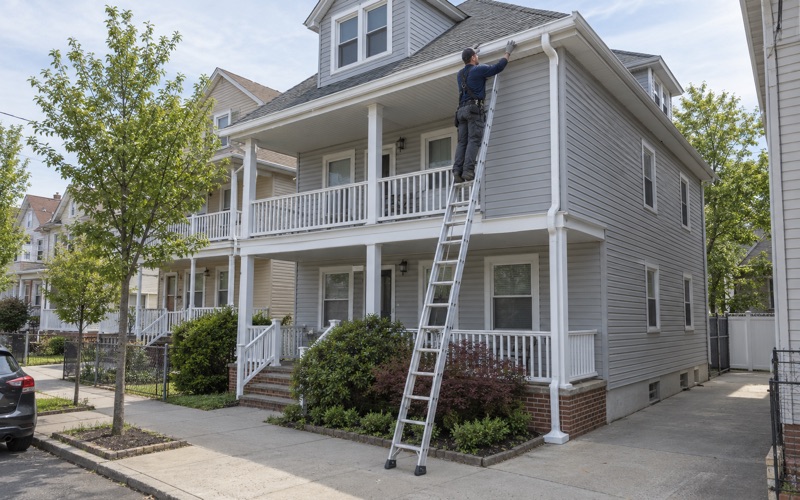
When the water is coming through the roof, we follow it back uphill along the rafters and decking to where it enters. On older houses that point can be several feet from the stain, at a flashing joint, a nail pop or a cracked pipe boot.
Top-Floor Ceiling Stains After Rain
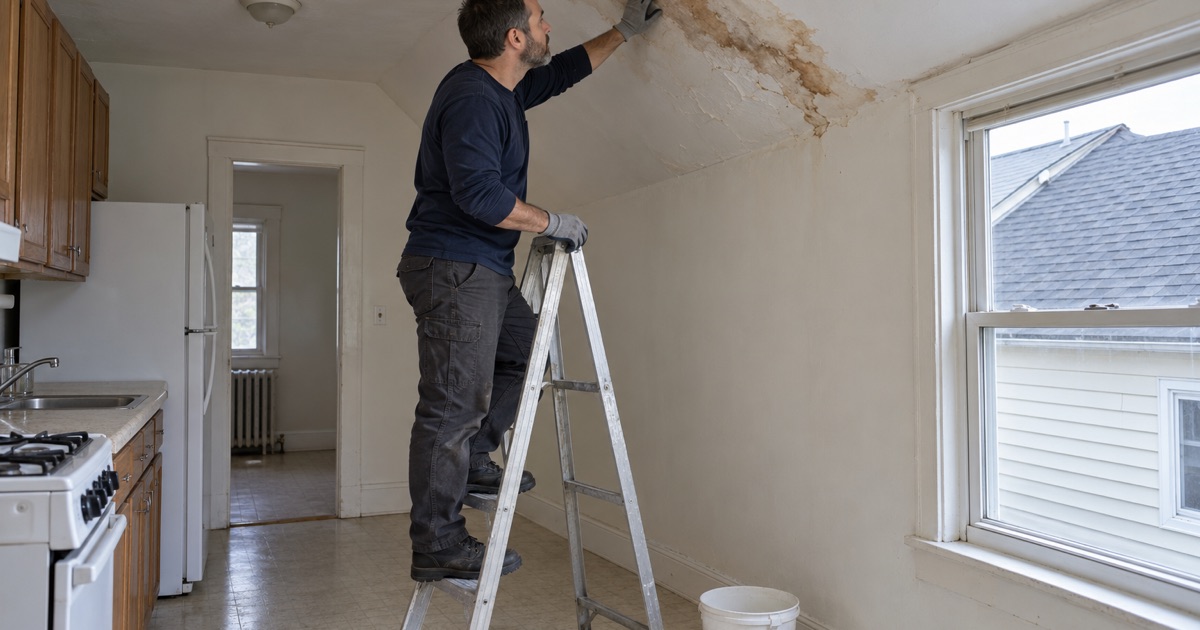
A brown ring on the top-floor ceiling after a storm is the most common reason we are called. We trace it from the room below, up through the attic or ceiling cavity, and onto the roof surface, then photograph what we find at each step. You see the cause before you see a price, and the repair is matched to that cause rather than to the size of the stain.
Chimney, Vent Pipe and Skylight Leaks
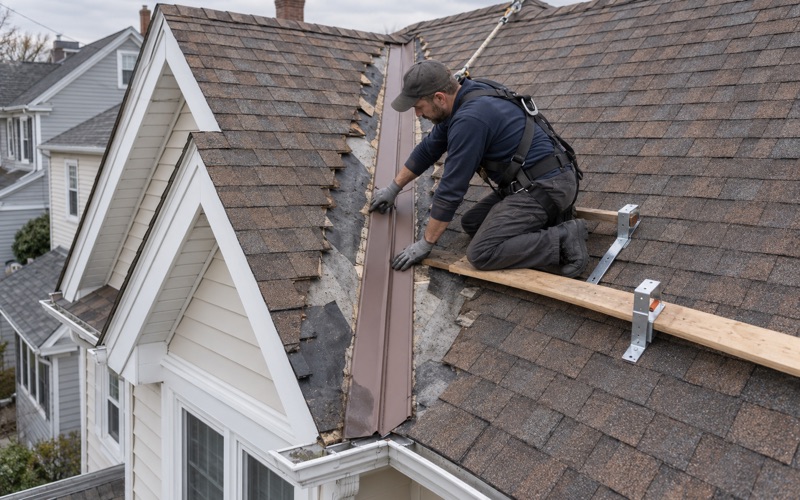
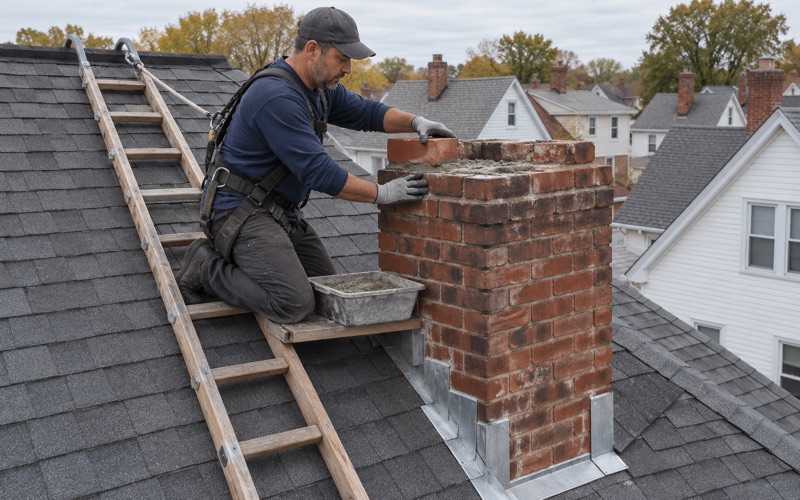
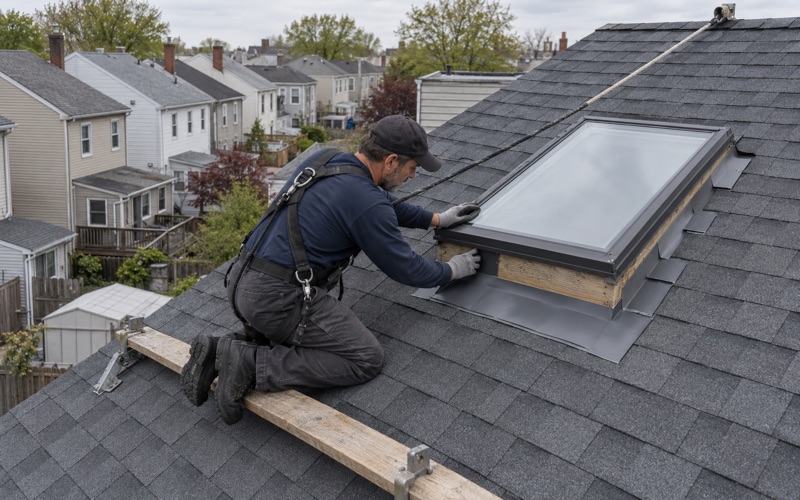
Penetrations leak far more often than open roof field. Step and counter flashing at a chimney, rubber pipe boots that crack in the sun, and curb flashing around an older skylight are where we look first. We replace failed boots with new rubber or lead flashing boots, reset or replace step and counter flashing, and reseal skylight curbs rather than smearing roof cement over the joint.
Party Wall Leaks Between Houses
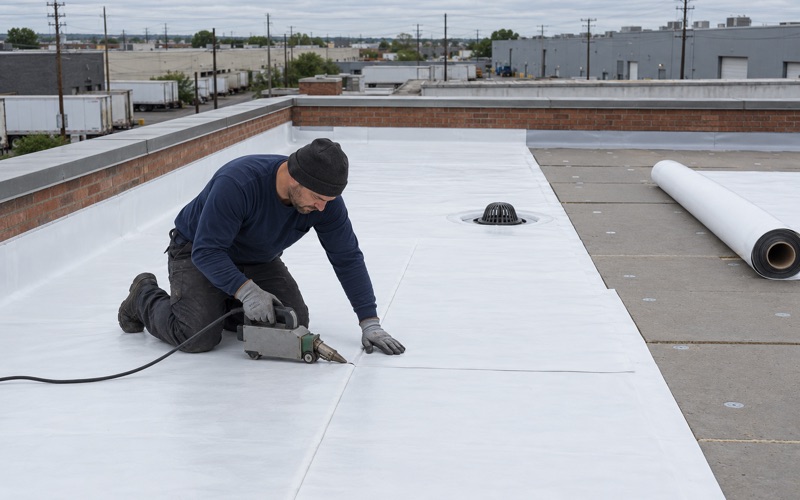
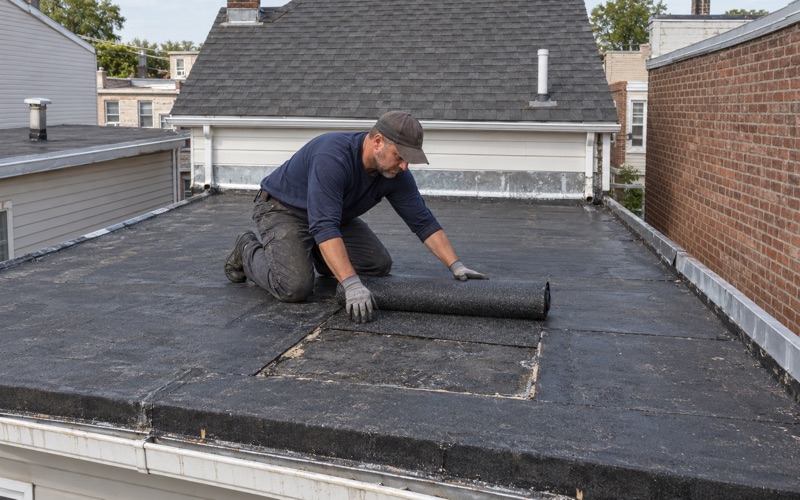
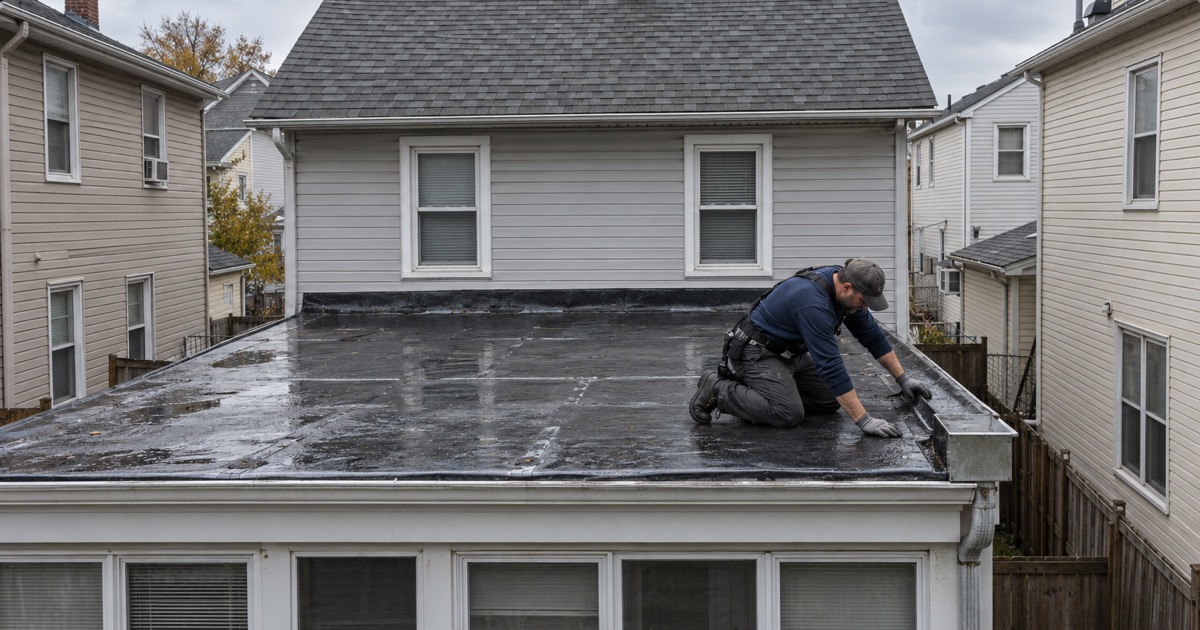
Where two houses share a wall, water can travel along the parapet, the shared gutter or the flashing on either side before it shows up indoors. We trace the line on both roofs, with the neighbor’s permission, before deciding whose roof is at fault. That keeps the repair honest and keeps neighbors from paying for each other’s problems.
Blown-Off Shingle Repair After Wind
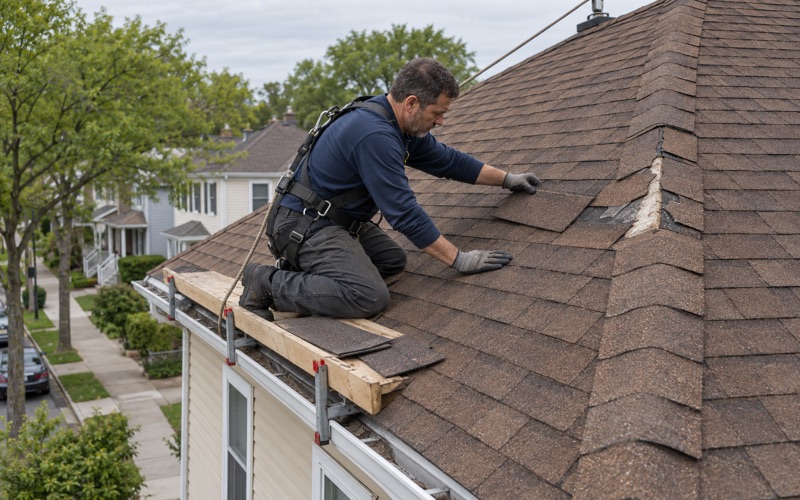
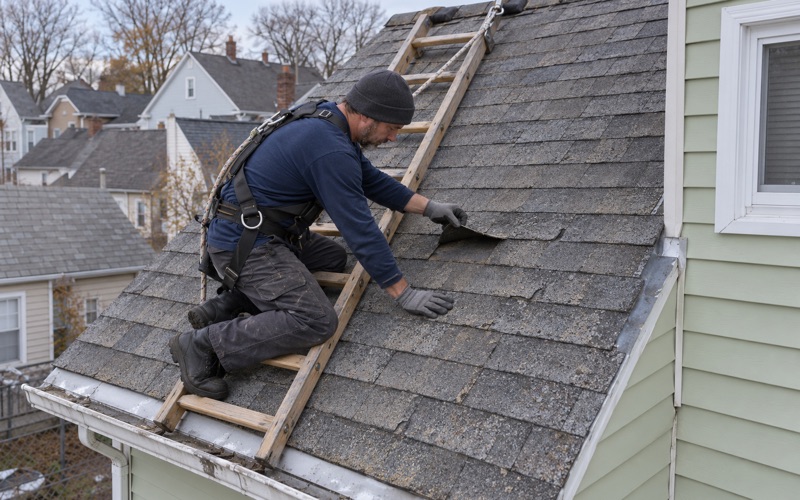
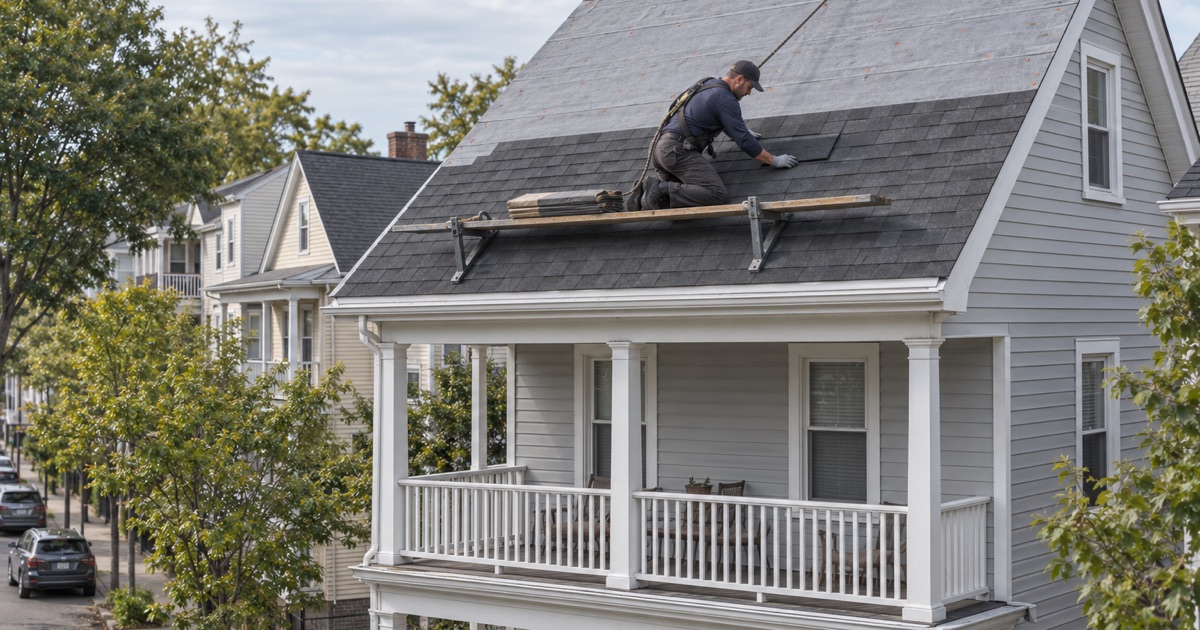
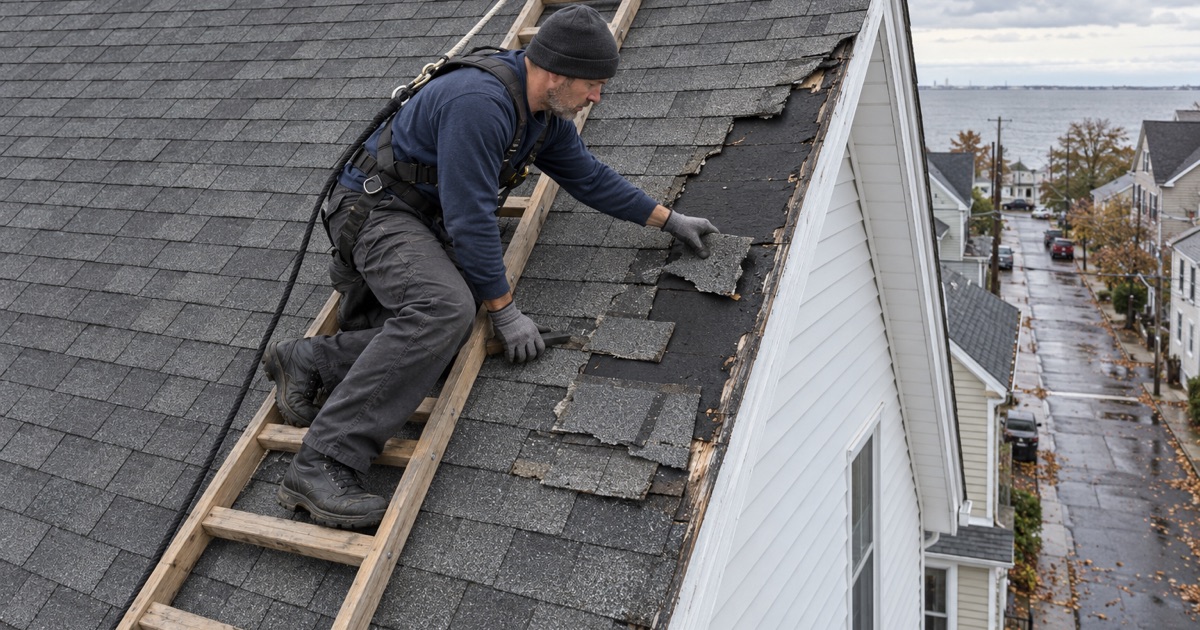
Wind lifts shingles at the eaves, rakes and ridge first, breaking the sealant strip and sometimes tearing the tab off entirely. We replace missing shingles with a matched profile where one is available, hand-seal the lifted ones around them, and check the underlayment that was exposed. Shingles carrying ASTM D3161 Class F or ASTM D7158 Class H wind ratings are what we use for the replacements.
Ice Dams and Winter Eave Leaks
An ice dam forms when heat escaping into the attic melts snow higher on the roof and the water refreezes at the cold eave, backing up under the shingles. We fix the leak, then look at the cause: attic insulation, air leaks from the floor below and ventilation. On a replacement, self-adhering ice and water barrier meeting ASTM D1970 goes along the eaves.
Leaks Behind Gutters and Fascia
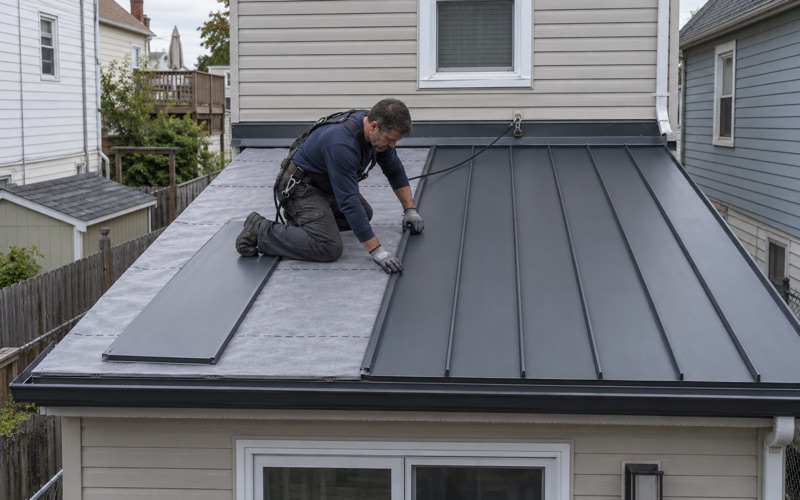
Water that runs behind a gutter rots the fascia board and stains the soffit, and it usually means missing drip edge or a gutter hung too low. We install drip edge at the eaves and rakes, rehang or replace the gutter so it catches the runoff, and replace rotted fascia. On pre-1978 houses, painted trim is handled under the EPA RRP lead-safe rule.
Emergency Roof Tarping
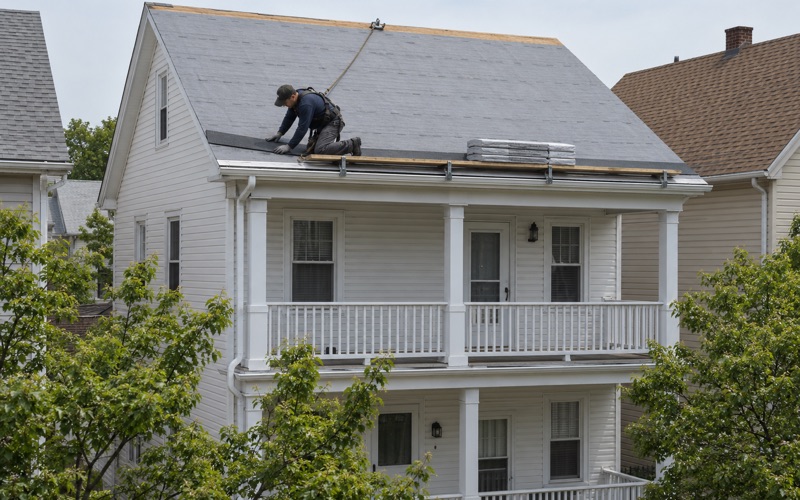
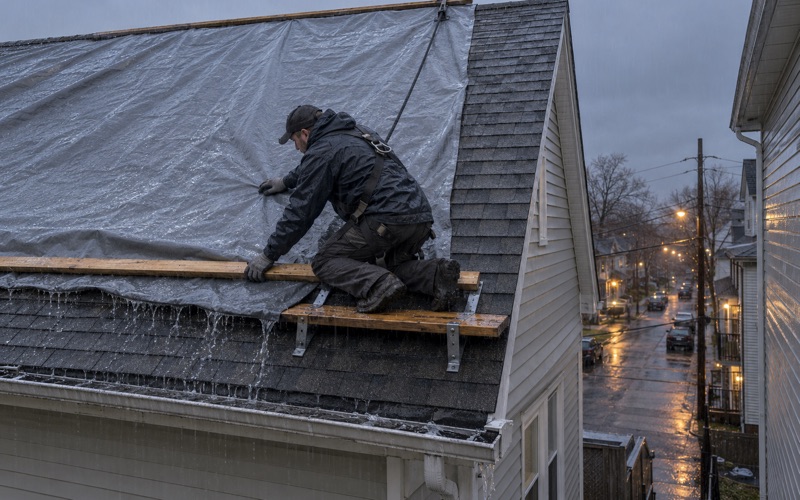
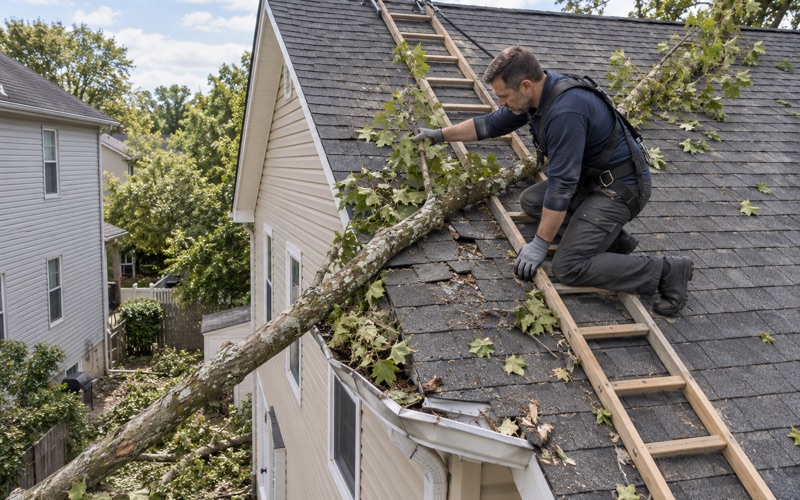
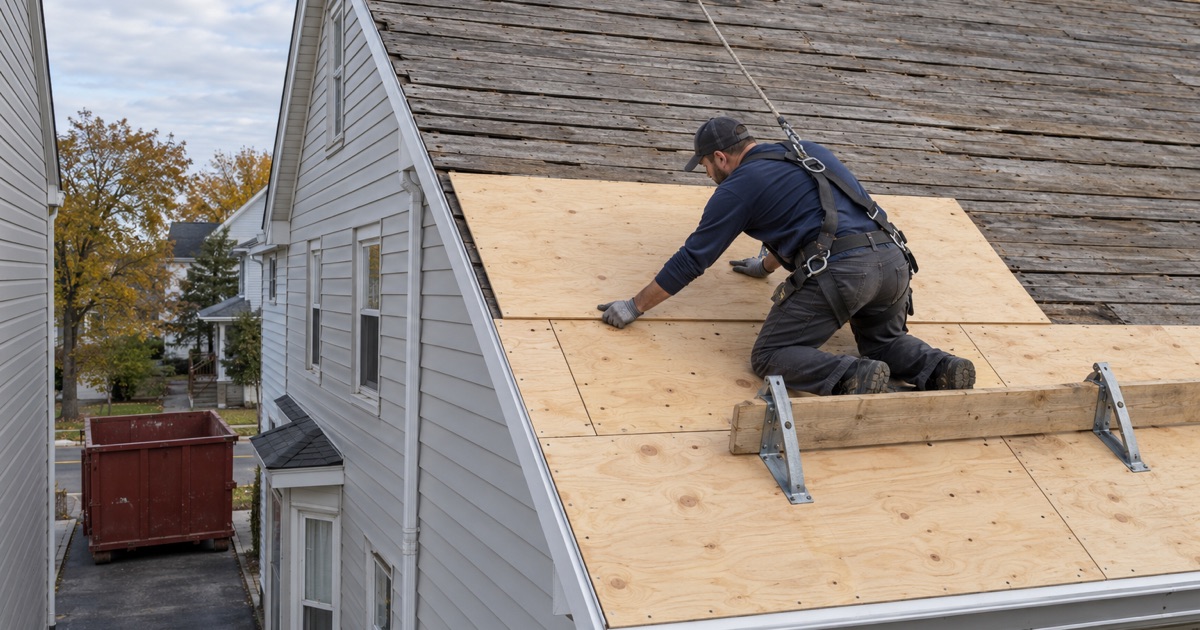
When a tree limb, a storm or a failed repair leaves a roof open, the first job is keeping water out. We secure tarps over the opening, fastened through battens rather than weighted with bricks, and photograph the damage before anything is covered. In Bayonne the Building Department accepts notice of emergency roof work by email, with the permits obtained within 72 hours where a permit is needed.